
AI Product Photography vs Traditional Studio Shoots: Cost Breakdown
Line-item cost of a 2026 studio product shoot versus AI product photography — packshots, lifestyle, hidden fees, and when a hybrid workflow wins.
On this page
A traditional studio product shoot in 2026 typically runs $25–$75 per white-background packshot and $100–$500 per styled or on-model frame, with day rates from $800–$3,000 before retouching, shipping, and rush fees. AI product photography is priced per credit or subscription, so the same catalog refresh often costs tens of dollars instead of tens of thousands — if the image only needs to sell the product, not prove a campaign.
This breakdown compares AI vs traditional studio product photography the way a buyer compares quotes: what the invoice includes, what it hides, how the math changes at 20 / 100 / 500 SKUs, and when you should still book a real set.
What is AI product photography versus a traditional studio shoot?
A traditional studio shoot is a physical production. You book a photographer, rent a space, ship samples, light the product, and wait for retouching. The output is a fixed set of frames. Changing a background, a model, or a marketplace crop means another booking.
AI product photography starts from a real product photo — a flat lay, a packshot, or an existing listing image — and generates new scenes, models, and backgrounds in chat. DeepKolor's AI product photography workflow is upload, describe the shot, download. No set build. No sample freight. No day-rate minimum.
Both produce listing and campaign images. They do not buy the same thing. The studio sells a controlled capture of a physical object. AI sells volume, variants, and turnaround. The cost gap comes from that difference, not from "cheaper pixels."
How much does a traditional product photoshoot cost?
There is no single rate. Studios quote five ways, and the cheapest model depends on SKU count and shot type.
| Pricing model | Typical 2026 range | Best when |
|---|---|---|
| Per image | $25–$75 packshot; $100–$500 lifestyle / on-model | Small batches, mixed shot types |
| Per hour | $75–$250 | A handful of SKUs, quick reshoots |
| Per day | $800–$3,000 photographer time | Mid-size catalogs, one set, full control |
| Per product | $15–$300 per SKU | Fixed shot list at volume |
| Package | $300–$2,500 per bundle | Predictable monthly volume |
Those ranges show up consistently across 2026 studio rate cards and photographer guides (Shopify's pricing explainer, commercial rate roundups, and AI-vs-studio cost posts). White-background work sits at the bottom. On-model and lifestyle sit at the top because they add a model, a stylist, props, and heavier retouching.
A full studio day often yields 30–60 finished images. That puts the effective day-rate cost around $35–$165 per frame before add-ons — not the headline per-image number on the quote.
What is included in a studio quote?
A clean quote usually covers photographer time, basic lighting, a white or simple set, and light color correction. It often does not cover:
- Studio hire billed separately ($150–$2,000/day depending on market)
- Model, hair, and makeup for apparel
- Stylist and prop spend
- Ghost-mannequin reconstruction
- Usage licenses limited by channel or term
- Rush delivery (commonly +25–50%, sometimes more)
Ask for an itemized shot list: how many finals, which angles, which license, and what counts as a revision. Two quotes at "$50/image" are not comparable if one includes retouching and the other invoices it later.
Why do hidden fees inflate the invoice?
The quoted rate is the headline. The invoice is larger. Common add-ons:
- Retouching — $5–$25 per image for cleanup; ghost mannequin and jewelry work run higher
- Sample shipping — $50–$200+ per shoot, more for cross-border samples
- Rush fees — 25–200% when a launch date slips into the photographer's calendar
- Reshoots — a rejected crop or off-white background can mean paying twice
- Coordination time — briefing, sample prep, and review easily add 5–15 internal hours
Cost guides that itemize these lines put the uplift at 50–100% on top of the quote. A "$60/image" packshot often lands closer to $90–$120 delivered. Compare AI against that number, not the first page of the PDF.
How much does AI product photography cost compared to a studio?
AI tools do not charge a day rate. They charge per generation, per credit, or per month. Industry write-ups in 2026 commonly place finished AI catalog images in the $0.50–$2.00 band on vendor-specific plans. Self-serve subscriptions sit much lower once you amortize a monthly credit pool across many SKUs.
DeepKolor prices by credits, not by shoot day. Public pricing as of this writing:
| Plan | Price | Credits | Rough image count at ~4 credits/image |
|---|---|---|---|
| Try Pack (one-time) | $29.90 | 1,000 | ~250 images |
| Starter (monthly) | $30 | 1,200 | ~300 images |
| Pro (monthly) | $39.90 | 3,000 | ~750 images |
"1 image ≈ 4 credits on average" is the on-site estimate. Higher resolution and video use more. Every paid plan includes commercial rights and no watermark. That is the number to put next to a studio quote — not a made-up "80% off" badge.
What disappears on the AI side: studio hire, sample freight, model day rates, rush premiums, and the reshoot booking cycle. What does not disappear: your time to brief the scene, pick winners, and reject frames that warp a label, a gem, or a silhouette. AI is cheap per output. It is not free of judgment.
Which option costs less at 20, 100, or 500 SKUs?
Use midpoints, not best-case marketing. Assume 5 images per SKU (one packshot + four lifestyle or on-model variants) and a studio mix of $50 packshot + $150 lifestyle, plus 50% hidden costs. AI side uses DeepKolor's published credit math.
| Catalog | Images | Studio (quote + 50% hidden) | DeepKolor credits path | What changes |
|---|---|---|---|---|
| 20 SKUs | 100 | ~$19,500 | One Starter month ($30) covers ~300 images | Studio minimums dominate; AI is a rounding error |
| 100 SKUs | 500 | ~$97,500 | Two Pro months (~$80) cover ~1,500 images | Studio scales linearly; AI does not |
| 500 SKUs | 2,500 | ~$487,500 | A few Pro months, or Enterprise if the team ships weekly | The gap is a budget line, not a rounding error |
These studio totals are illustrative, built from published per-image bands. Your city, category, and license terms will move them. The shape does not: traditional cost tracks SKU count and shot complexity; AI cost tracks how many generations you keep.
The second cost is time. A studio catalog refresh is often 4–12 weeks (brief, book, ship, shoot, retouch, revise). An AI pass on existing product photos is hours to a few days, plus a QA pass. If a seasonal drop or a paid-social test cannot wait for the next available Tuesday, the calendar is part of the price.
Can AI product photography replace a studio shoot?
For most catalog work — packshots, lifestyle variants, marketplace extras, ad crops — yes, AI can replace the repeat studio day. That is the expensive part of the year: refreshing 50 SKUs you already photographed, testing a new background, or adding a second model look.
It should not replace the first honest photo of a new product. AI needs a source. A sharp packshot or a flat lay is still the cheapest "studio" work you will ever buy, and it is the input AI product photography actually uses.
When should you still book a traditional studio?
Book a set when the image has to function as evidence, not just atmosphere:
- Hero campaign and press work where art direction, a real location, or a specific talent is the point
- Heritage and craft products where maker, material, and workshop are the story
- Trust-critical or regulated categories (medical, supplements, safety gear) where provenance matters
- Highly reflective, transparent, or micro-detailed goods when the first AI pass keeps inventing geometry
- Fit-critical apparel if you need a documented size run on a real body, not a styled suggestion
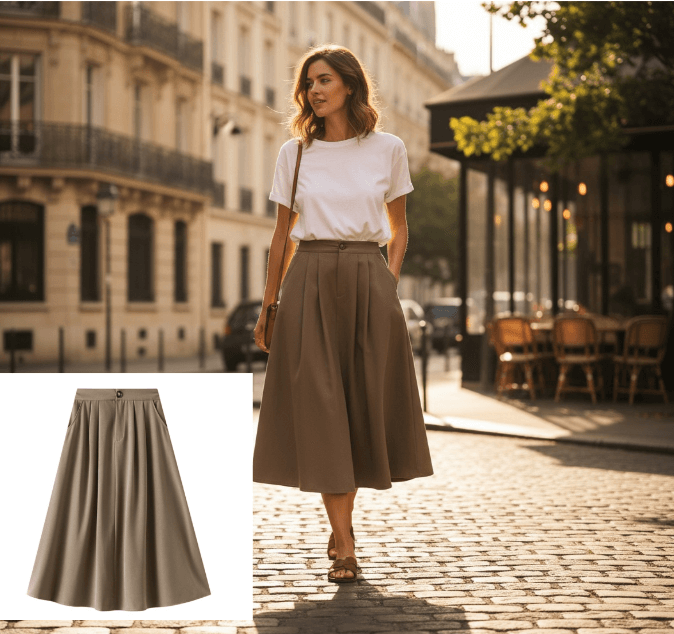
Apparel brands that still want on-model volume without a casting day can generate looks from a garment photo via virtual try-on, then keep one real fit shoot per season for the size chart.
Is AI product photography good enough for Amazon and Shopify?
Good enough means accurate, not "looks expensive." Marketplaces judge the product, the crop, and the background — not whether a human tripped a shutter.
Amazon's main-image rules (pure white background, product filling most of the frame, no lifestyle clutter) are technical. Shopify has no platform ban on AI images. Both still require the picture to represent the item the customer receives. Color drift, invented hardware, or a stretched silhouette is a returns problem and a listing-risk problem, regardless of tool.
A practical split used by many sellers: keep a real packshot as the main image, then use AI for lifestyle, infographic, and channel crops. That is also the cheapest hybrid. You pay a studio once for the evidence frame, then stop paying a day rate every time ads need a new scene.
If a generation changes the product, throw it out. Cheap images that mis-sell the SKU are the most expensive photos you will ever run.
How do you run a hybrid workflow without wasting the budget?
Treat photography as two budgets, not one argument.
- Studio budget (few images, high proof). One packshot set per new SKU. Optional seasonal hero day for brand work. Itemize retouching and licenses up front.
- AI budget (many images, high iteration). Lifestyle scenes, model diversity, marketplace extras, ad variants. Upload the studio packshot, describe the set, keep only frames that stay true to the product.
- QA budget (hours, not shoot days). One person checks labels, color, proportion, and marketplace crop. This is the line that makes AI cheaper and safer.
Do not spend studio money on the fourth lifestyle angle for SKU #87. Do not spend AI generations trying to invent a product you have never photographed. The hybrid is cheaper than either extreme: all-studio catalogs stall; all-AI catalogs that skip a real source photo eventually get returned.
Related reading
For a vendor shortlist after you have the cost picture, see 10 AI product photography tools for fashion ecommerce.
Frequently asked questions
How much do people charge for product photography?
In 2026, most published US rates land at $25–$75 for a basic white-background image and $100–$500 for styled or on-model work. Day rates for the photographer alone are often $800–$3,000; add studio hire, talent, and retouching on top. Small catalogs commonly spend $500–$2,000 on a starter shoot before lifestyle or models enter the brief.
Is AI product photography cheaper than hiring a photographer?
At anything above a one-off hero set, yes. A 20-SKU lifestyle set is already a four-figure studio invoice. The same volume fits inside a single DeepKolor credit month. Hire the photographer when you need a controlled capture or a campaign hero. Use AI when you need the next 80 variants.
Can I use AI product photography commercially?
Images generated on DeepKolor include commercial usage rights and no watermark on paid plans. Use them on listings, ads, and social as long as the picture still matches the product you ship. Rights to the file are not a license to misrepresent the SKU.
How fast is AI product photography compared with a studio?
A studio refresh is usually weeks: book, ship, shoot, retouch. AI generation is seconds to minutes per image once you have a source photo. The real clock is QA — selecting and rejecting — not the render itself.
Does AI product photography work for fashion and jewelry?
Yes for catalog and lifestyle volume: garments on virtual models, jewelry in controlled light, accessories in context. Keep a real photo when cut, stone, or metal has to be documentary. Jewelry try-on and on-body work are a separate, closer look than a packshot generator.
What types of product photos can AI create?
From one source image you can generate packshot-style frames, lifestyle scenes, on-model looks, seasonal backgrounds, and channel crops. DeepKolor is built for fashion, jewelry, shoes, bags, and general e-commerce stills — not for inventing a product that has never been photographed.
Related posts
What Is an AI Design Agent? Definition and How It Works
An AI design agent takes a brief, creates the visual, and edits with you in chat. See how it differs from image generators and when to use one.
AI Jewelry Product Photography: How to Create Ecommerce Images That Sell
Learn how to create AI jewelry product photography for rings, necklaces, and bracelets — from one clean source photo to ecommerce-ready images, plus accuracy limits and marketplace image rules.
Amazon Product Image Requirements: A Seller's Checklist for 2026
A 2026 seller checklist for Amazon product image requirements — main-image rules, pixel sizes, additional slots, suppression fixes, and a pre-upload review.